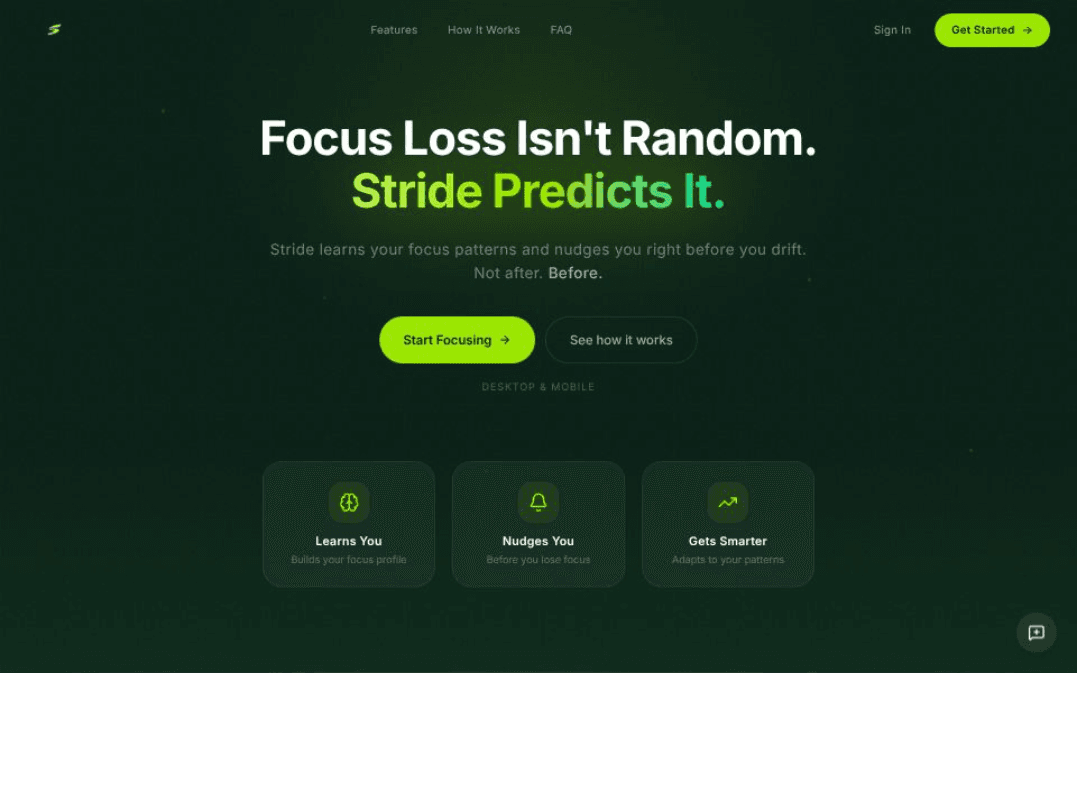
Stride
AI-powered focus companion
Stride started as a hackathon project and grew into something I genuinely care about. The premise is simple: most focus tools tell you to work, but they don't actually help you stay in it. Stride sits with you during a session, watches how things are going, and steps in with an AI-driven nudge exactly when you're starting to drift. Not on a timer. Not randomly. Based on what's actually happening.
Key architectural decisions
The intervention engine
The core of Stride is a Claude-powered intervention system that generates contextual nudges during focus sessions. I used the Opik SDK to add observability on top of it — tracking every intervention, scoring them with an LLM-as-judge setup, and running A/B tested message variants to learn which kinds of nudges actually move people back into focus and which ones just get dismissed.
Solving activation before retention
Early session data from Supabase told a clear story — users were dropping off before they ever felt the product work. I shipped a first-session overlay and a demo intervention so new users experience the AI nudge in their very first session, before they've had a chance to leave. Retention only becomes a real problem once people actually activate.
The cron bottleneck
The session processor runs on a cron job, but it was processing sessions sequentially. That works fine at low volume, but at 50+ concurrent sessions it starts brushing against Vercel's 10-second timeout ceiling. The fix is parallel processing — something I'm working through now alongside a potential move to Vercel Pro.